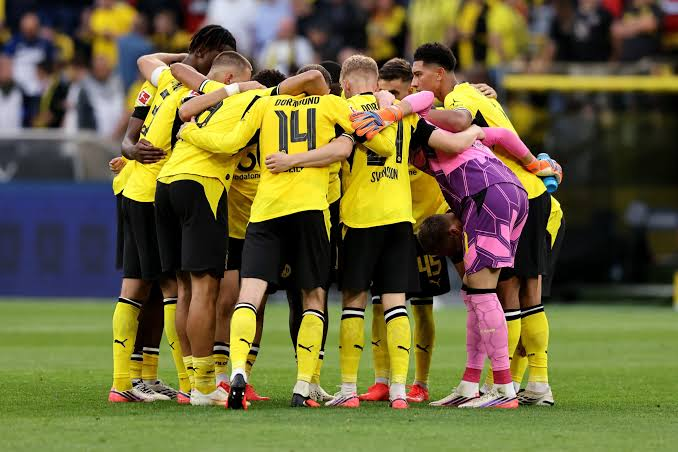
The 2009–2010 German Bundesliga earned a deserved global reputation as one of Europe's most open, attack-minded domestic competitions, producing an average of 2.83 goals per game and regular multi-goal slugfests. Because retail betting volume and public perception overwhelmingly leaned toward high-scoring matches, bookmakers routinely anchored total goals lines at 2.75 or 3.0 across the entire division. This broad commercial bias created an exceptional counter-trend opportunity for observant analysts: identifying the select group of tactically disciplined squads whose structural defensive frameworks systematically suppressed chance quality, thereby unlocking reliable value on under positions that the market persistently overpriced.
The Structural Paradox of Backing Unders in an Aggressive Attacking League
Market pricing in high-scoring environments tends to inflate baseline goal lines uniformly, penalizing all eighteen clubs with the general traits of the wider competition. When recreational capital routinely pursues goals, bookmaker liability forces odds compilers to elevate totals to balance their books, leaving total goal unders heavily shaded with plus-money or low-commission prices. In the 2009–2010 campaign, while clubs like Werder Bremen and Wolfsburg generated rampant two-way scoring chaos, disciplined defensive systems operated under the radar, yielding far fewer chances than their quoted totals implied.
Value-oriented sports betting does not depend on finding matches that are guaranteed to end in scoreless draws, but on locating instances where the true mathematical probability of a low-scoring game exceeds the market's implied probability. When a fixture between two tactically conservative sides is priced at standard 2.75 thresholds simply because it takes place in Germany, taking the under captures immediate positive expectation. Systematically exploiting this gap required an uncompromising analysis of defensive shape, possession tempo, and territorial containment to separate genuine low-event operations from teams that were simply experiencing temporary finishing droughts.
Profiling the Resilient Defensive Blueprints of the 2009–2010 Campaign
Identifying which clubs justified consistent investment on low totals demands examining underlying defensive efficiency rather than relying strictly on raw clean-sheet counts. A granular breakdown of tactical concessions across the league highlights how a select group of managers bucked the prevailing German trend of open-field vertical transitions.
The recorded figures from that season illustrate how specific squads separated themselves from the high-event baseline of the league, constructing defensive performance profiles that systematically rewarded unders across distinct market variations.
| Club | Manager | Goals Conceded | Clean Sheets | Average Match Total | Under 2.5 Realization Rate | Primary Defensive Mechanism |
| FC Schalke 04 | Felix Magath | 31 | 15 | 2.47 | 64.7% | Deep mid-block, physical aerial control, elite shot-stopping |
| Bayern Munich | Louis van Gaal | 31 | 13 | 3.03 | 44.1% | Monopolized possession, sterile tempo against compact visitors |
| Eintracht Frankfurt | Michael Skibbe | 47 | 9 | 2.50 | 58.8% | Ultra-conservative away posture, low shot-volume generation |
| 1. FC Köln | Zvonimir Soldo | 42 | 11 | 2.21 | 67.6% | Rigid low block, deliberate pacing, low-event midfield stagnation |
These metrics reveal that nearly one-third of the league operated under systemic constraints that directly contradicted the popular narrative of unbridled German goalfests. 1. FC Köln generated the lowest match-total average in the league at barely 2.2 goals per fixture, yet opening retail lines routinely posted their games at standard 2.5 thresholds with attractive plus-money payouts on the under. Bettors who targeted these defensive profiles bypassed high-risk outright predictions, capitalizing instead on structural market mispricings that failed to adjust for deliberate, pace-suppressing tactical designs.
The Tactical Mechanics of Spatial Choking and Shot Suppression
Suppressing expected goals over a prolonged 34-match season requires a repeatable tactical model that neutralizes transition space before opponents reach shooting positions. Teams that delivered consistent profits on under lines did not rely on heroic last-ditch defending; they dismantled offensive rhythm through strict spatial geometry and physical containment in the middle third.
Compressing the Central Half-Spaces Against Transition Counter-Attacks
Under the tactical stewardship of Felix Magath, Schalke 04 perfected the art of central compression, forcing opponents into low-percentage horizontal circulation. By stationing two disciplined holding midfielders directly in front of the central defenders and maintaining less than twelve meters of vertical space between the lines, Schalke systematically denied opponents entry into the high-value central zone outside the penalty box.
This spatial restriction forced opposing playmakers to move the ball wide, where Schalke's physically imposing fullbacks and center-backs dominated aerial crossing duels. Because opposing strikers were denied direct central passing lanes, their average shot distance drifted beyond twenty meters, drastically degrading individual shot conversion rates. Furthermore, Schalke's reluctance to overcommit numbers in attacking transitions meant they rarely surrendered counter-attacks, turning their matches into deliberate, low-possession grinds that steadily drained scoring potential out of each half.
Pricing Discrepancies Driven by High-Scoring Bundesliga Reputations
Bookmaker pricing algorithms in 2009–2010 were notoriously slow to isolate defensive anomalies in leagues with elevated scoring averages. Public syndicates and recreational accumulators overwhelmingly wagered on Over 2.5 goals and Both Teams to Score (BTTS), prompting sportsbooks to adjust their margins to protect against offensive blowouts.
Consequently, matches featuring defensively competent mid-table sides carried inflated totals that reflected public sentiment rather than real-world chance creation. An analyst assessing a clash between 1. FC Köln and Eintracht Frankfurt was frequently presented with an Under 2.5 line priced well above even money, despite both teams ranking in the bottom quartile for shot conversion and progressive passing speed. Exploiting these commercial biases by consistently taking the contrarian, unglamorous side of total-goals lines formed the bedrock of mathematical value throughout the season.
Diagnostic Process for Filtering Total-Goals Propositions
Determining whether a fixture warrants capital deployment on an under requires a systematic evaluation sequence that tests tactical alignment, physical recovery, and market pricing before confirming any selection.
To protect an operating bankroll from emotional guesswork, an analyst must run prospective fixtures through a structured filtering protocol that verifies both tactical suitability and mathematical price viability.
[Isolate Matchup Involving Verified Low-Block Squad]
│
▼
[Cross-Reference Combined Open-Play xG Projection (≤ 2.10)]
│
▼
[Verify Absence of Key Central Defensive Absences]
│
▼
[Audit Tactical Incentive: High Leverage / Relegation Clashes]
│
┌────────────────┴────────────────┐
▼ ▼
[Edge Exceeds Market Threshold] [Projected Edge Below 3.0%]
│ │
▼ ▼
[Route Position to Execution] [Discard: Insufficient Value]
Applying this procedural sequence prevents an analyst from mistaking an uninspired attacking performance for genuine defensive value. If a club's recent under outcomes were produced by aberrant finishing errors rather than structural spatial compression, the model flags the risk and rejects the wager. Only fixtures that confirm genuine defensive coordination and offer sufficient mathematical cushion relative to the market line make it through to the capital allocation phase.
Market Execution and Capturing Alternative Goal Margins
Maximizing returns on defensive matchups requires access to flexible Asian total splits rather than settling for rigid fixed-fraction markets. Capturing half-goal margins, such as shifting from Under 2.5 to Under 2.75, routinely represents the operational difference between sustaining a minor profit and suffering an outright loss on late-game variance.
A sharp bettor observes how closing lines adjust under public pressure, noticing that casual volume regularly forces alternate totals to unviable extremes as kickoff nears. Situational conditions where retail volume drives a defensive matchup's total up to an unnatural 3.0 threshold create exceptional opportunities to enter via a high-liquidity platform with minimal vigorish; routing trades through an elite provider such as ufa168 enables value-focused participants to lock in alternate Asian under lines that fully exploit public market distortions. Securing these protective split-lines preserves balance-sheet equity against stoppage-time consolation goals that disrupt otherwise flawless defensive containment.
Fragile Conditions That Invalidate Defensive Modeling
Even the most robust defensive structures break down when situational disruptions dismantle the tactical parameters that make low-scoring matches probable. Assuming a defensive unit will maintain its structural integrity regardless of in-match conditions is a fatal flaw in totals handicapping.
- Early Disciplinary Reductions: A central defender receiving a red card inside the first thirty minutes completely shatters low-block geometry, instantly accelerating opponent shot volume.
- Rapid Game-State Shifts: Conceding a freak goal inside the opening ten minutes forces a conservative host to abandon its defensive shell, opening transitional spaces that favor a high-scoring game.
- Midfield Enforcer Suspension: The loss of an elite ball-winning defensive midfielder removes the tactical barrier that prevents opposing playmakers from penetrating the central half-spaces.
- Severe Pitch and Weather Conditions: Waterlogged surfaces or heavy snowfall increase unforced handling errors and defensive deflections, inflating chaotic set-piece scoring chances.
When these systemic disruptions occur, the mathematical justification for an under position vanishes. Recognizing these structural vulnerabilities forces the analyst to monitor lineup confirmations diligently, discarding matches where key defensive personnel are missing rather than blindly betting on a team's historical season statistics.
Emotional Discipline and the Avoidance of Variance Spills
Navigating under-goals markets requires immense psychological fortitude, as watching a low-scoring position unfold is inherently stressful. A bettor backing the under must endure ninety minutes where any single mistake, refereeing controversy, or deflected shot threatens to destroy an otherwise sound analytical position.
Experiencing an agonizing defeat to an unwarranted 94th-minute goal often triggers acute emotional frustration, tempting undisciplined participants to abandon their long-term methodology. Observation indicates that an emotionally compromised bettor, reeling from an unlucky football bad beat, will frequently migrate toward an immersive casino online portal to generate instant financial recovery; trading calculated sports probability models for games ruled entirely by fixed mathematical house edges represents an immediate surrender of bankroll control. Long-term profitability requires treating late-goal bad beats as an unavoidable business expense, maintaining strict psychological boundaries between empirical sports analysis and recreational chance.
Summary
The 2009–2010 Bundesliga proved that high-scoring domestic leagues present fertile ground for identifying mispriced under-goal opportunities. By isolating teams with disciplined defensive shapes, such as Schalke 04 and 1. FC Köln, an analyst could consistently exploit bookmaker models that artificially inflated totals to counter recreational bias.
Achieving sustainable success in total-goals markets demands dissecting spatial compression mechanics, screening matches through rigorous multi-step diagnostic filters, and securing flexible Asian handicap splits through low-margin channels. By viewing match pace through the prism of tactical structure rather than public scoring narratives, a disciplined bettor transforms defensive resilience into a consistent, long-term mathematical edge.

